Coding Jobs Salary Guide: Maximize Your Earnings
Understanding Salaries in Coding Careers
If you’re considering a career in coding, one of the key questions you might have is about salary expectations. Coding careers, ranging from medical coding to software development, offer diverse opportunities and compensation packages. These roles are integral to various industries, reflecting the importance of technology and data management in today’s economy. This article will explore the salary landscape of various coding jobs to help you make informed career decisions. By understanding these salary trends, you can align your career choices with your financial goals and personal interests.
Coding careers are as varied as they are in demand. From medical coders who ensure accurate billing in healthcare to software developers creating the latest apps, coding jobs span multiple industries. This diversity means that salaries can vary widely depending on the specific career path you choose. In addition to traditional coding roles, emerging fields such as data science and machine learning also offer lucrative opportunities. The integration of coding skills across sectors like finance, healthcare, and entertainment further expands the potential career paths available to coding professionals.
The demand for coding skills continues to grow as businesses and organizations increasingly rely on technology to improve efficiency and drive innovation. This trend is evident in the expansion of coding bootcamps and educational programs designed to equip individuals with the necessary skills to succeed in these careers. As the tech landscape evolves, so too do the skills and specialties required, making it essential for coding professionals to stay updated with the latest developments and trends in their respective fields.
Medical Coding Jobs Salary
Medical coding is a specialized field within healthcare administration. Medical coders play a crucial role by translating healthcare services into standardized codes for billing and insurance purposes. These codes are essential for maintaining accurate patient records and facilitating proper healthcare reimbursement. According to the Bureau of Labor Statistics, the median annual wage for medical records and health information technicians, which includes medical coders, was about $44,090 as of 2020. This figure underscores the importance of their role in the healthcare industry.
The complexity of medical coding requires a strong understanding of medical terminology and coding standards, such as ICD-10 and CPT. As the healthcare industry continues to grow and evolve, the demand for skilled medical coders is expected to increase, potentially leading to higher salaries. Furthermore, advancements in electronic health records and telemedicine are creating new opportunities for medical coders to expand their expertise and contribute to the efficient management of healthcare data.
Factors Influencing Medical Coding Salaries
Certification and Education
Holding certifications like Certified Professional Coder (CPC) or Certified Coding Specialist (CCS) can boost earning potential. These credentials demonstrate a coder’s proficiency and commitment to maintaining high standards in their work. Additionally, some employers may offer higher salaries or incentives for certified professionals, recognizing the added value they bring to the organization.
Experience
Like many careers, experience plays a significant role. Experienced coders can earn significantly more than their entry-level counterparts. As coders gain experience, they develop a deeper understanding of complex coding scenarios and become more efficient in their work, making them valuable assets to their employers. Moreover, experienced coders may have the opportunity to take on supervisory or training roles, further enhancing their career prospects and earning potential.
Location
Salaries can vary by region. Urban areas or regions with high demand for healthcare services tend to offer higher salaries. This variation is often due to the cost of living and the competitive nature of the job market in those areas. Additionally, regions with a high concentration of healthcare facilities or research institutions may offer more opportunities for career advancement and specialization in niche areas of medical coding.
General Coding Jobs Salary
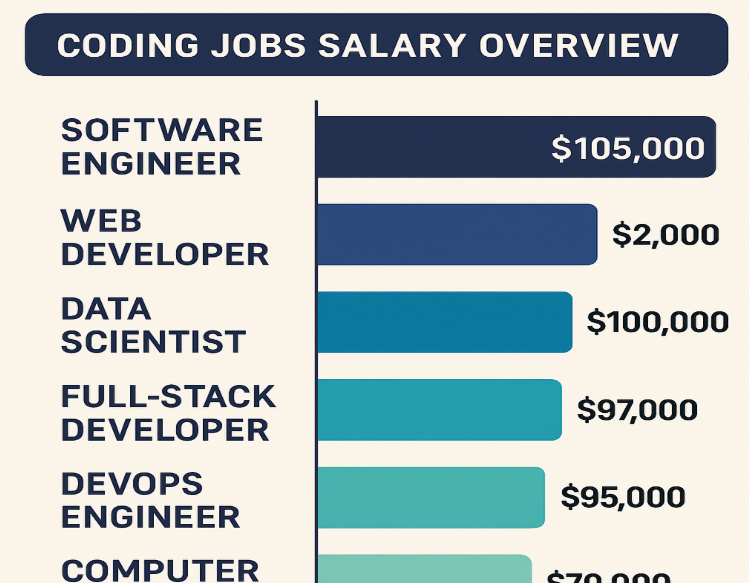
Beyond medical coding, coding careers encompass software development, web development, data analysis, and more. Each of these fields presents unique challenges and opportunities, attracting professionals with diverse interests and skill sets. Salaries in these fields can range significantly based on expertise, demand, and industry. For instance, a software developer working in the finance industry may earn more than one in the education sector due to the complexity and critical nature of financial applications.
The versatility of coding skills also allows professionals to pivot between different roles and industries, further broadening their career prospects. As technology continues to advance, new coding roles emerge, offering fresh opportunities for career growth and salary increases. Staying informed about industry trends and continuously enhancing one’s skill set can help coding professionals capitalize on these opportunities and achieve their desired career outcomes.
Software Development
Software developers are among the highest-paid professionals in the tech industry. Their work involves designing, building, and maintaining software applications that power everything from mobile apps to complex enterprise systems. According to the Bureau of Labor Statistics, the median annual salary for software developers was $110,140 in 2020. This high earning potential reflects the critical role software developers play in driving innovation and digital transformation across industries.
Specialization
Developers specializing in in-demand areas like artificial intelligence or cybersecurity often command higher salaries. These areas require advanced skills and knowledge, which are highly sought after by employers looking to stay competitive in a rapidly evolving tech landscape. Additionally, professionals with expertise in emerging technologies such as blockchain and augmented reality may also see increased demand and higher compensation.
Company Size and Industry
Large tech firms or niche startups in high-growth industries may offer competitive salaries and benefits. Companies in sectors such as finance, healthcare, and gaming often require specialized software solutions, leading to higher salaries for developers with relevant experience. Furthermore, the size and reputation of a company can influence salary levels, with established firms potentially offering more lucrative compensation packages compared to smaller startups.
Web Development
Web developers create and maintain websites, ensuring they are visually appealing, functional, and optimized for performance. They play a crucial role in shaping the online presence of businesses and organizations. The median annual wage for web developers was $77,200 in 2020. While this figure provides a general benchmark, actual salaries can vary based on several factors, including the developer’s skills, experience, and the specific needs of their clients or employers.
Skill Level
Advanced knowledge in front-end or back-end development can increase earning potential. Front-end developers focus on the user interface and experience, requiring strong design skills and proficiency in languages like HTML, CSS, and JavaScript. Back-end developers, on the other hand, work on server-side logic and database management, necessitating expertise in languages such as Python, Ruby, or PHP. Full-stack developers, who possess skills in both front-end and back-end development, often command higher salaries due to their versatility.
Freelancing vs. Employment
Freelancers may have variable income, while employed web developers might enjoy more stable earnings. Freelancers have the flexibility to choose their projects and clients, potentially leading to higher earnings if they secure high-paying contracts. However, this path also comes with uncertainties, such as inconsistent work and the need to manage administrative tasks. In contrast, employed web developers typically benefit from steady salaries, benefits, and opportunities for career advancement within their organizations.
Billing Coding Jobs Salary
Billing coding jobs, closely related to medical coding, focus on ensuring accurate and efficient billing processes in various industries. These professionals are responsible for converting services rendered into billable charges, facilitating timely payments and financial accountability. The average salary for billing coders can be influenced by several factors, including the complexity of the billing process and the industry in which they work.
Industry
Billing coders in healthcare may earn differently from those in other sectors like finance or retail. The healthcare industry often involves more intricate coding systems and regulations, potentially leading to higher salaries for those with expertise in this area. Conversely, billing coders in other industries may face different challenges, such as managing large volumes of transactions or working with specialized billing software.
Experience and Skills
Advanced skills in coding software and systems can lead to higher salaries. Billing coders proficient in using industry-specific software and who possess strong analytical skills are often in demand, as they can streamline billing processes and improve accuracy. Additionally, experienced billing coders may have opportunities to take on leadership roles or specialize in areas such as compliance or auditing, further enhancing their career prospects and earning potential.
Career Growth and Opportunities

The demand for skilled coders continues to grow across industries. This growth presents numerous opportunities for career advancement and salary increases. As technology continues to evolve, coding professionals must remain adaptable and proactive in their career development. By leveraging their skills and experience, they can position themselves for success in an ever-changing job market.
Certification and Continuous Learning
Pursuing additional certifications or staying updated with the latest technologies can enhance career prospects. Coding professionals who invest in their education and skill development are better equipped to adapt to industry changes and capitalize on new opportunities. Certifications in specialized areas, such as cloud computing or data science, can also differentiate candidates in competitive job markets.
Networking and Professional Development
Engaging in coding communities, attending workshops, and seeking mentorship can open doors to new opportunities. Building a strong professional network can lead to job referrals, collaborations, and insights into emerging industry trends. Additionally, participating in hackathons, conferences, and online forums can help coding professionals expand their knowledge and showcase their skills to potential employers.
Conclusion
Coding careers offer a wide range of salaries, reflecting the diversity of industries and roles. Whether you’re interested in medical coding, software development, or billing coding, understanding the factors that influence salaries can help you navigate your career path. By investing in education, gaining experience, and staying adaptable, you can maximize your earning potential and thrive in the coding industry.
Remember, while salary is an important consideration, finding a coding career that aligns with your interests and strengths will lead to long-term satisfaction and success. Pursuing a career that you are passionate about can lead to greater job fulfillment and motivation, ultimately enhancing your professional growth and achievements. As you embark on your coding journey, keep in mind that the skills you develop and the connections you make will be invaluable assets in reaching your career goals.
Forsee AI, a revolutionary AI-powered interview preparation tool designed to change the way you practice for coding interviews. Unlike traditional methods, Forsee AI not only reviews the code you write but also prompts you to verbally explain the logic behind your solutions. This dual approach ensures that you’re not just technically proficient but also articulate in expressing your thought process, a critical skill in real interviews.By providing realistic practice, immediate feedback, and customizable scenarios, it equips you with the skills and confidence needed to succeed in today’s competitive job market. Whether you’re preparing for a coding interview or a behavioral one, incorporating Mock Interview AI into your preparation strategy can make all the difference.