AI Job Security: Future-Proof Careers 2025
Jobs that AI can’t replace: AI preventing job offers 2025
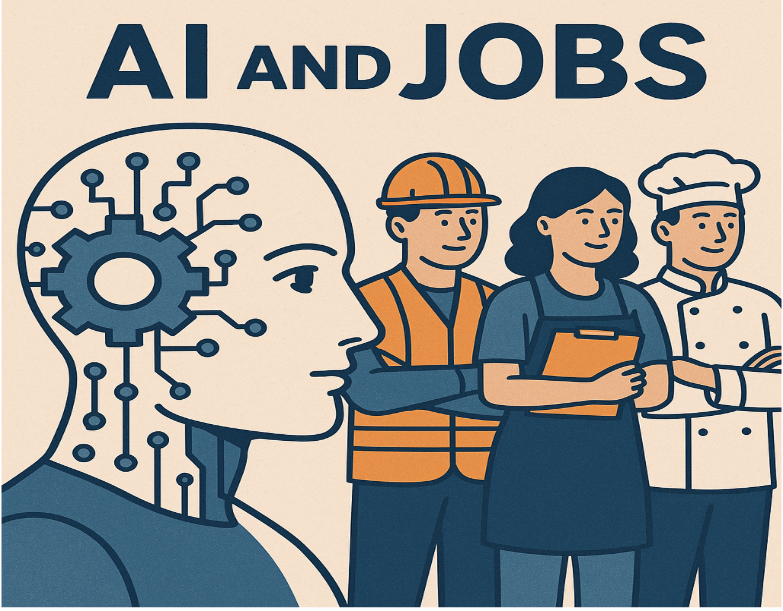
As we move towards 2025, the impact of artificial intelligence (AI) on the job market is a hot topic. Many people worry about AI taking over jobs, but it’s important to recognize that there are some roles AI can’t replace. Understanding which jobs are less vulnerable to AI can help individuals prepare for a secure future in the workforce.
The AI Job Market: A Double-Edged Sword
The integration of AI into various sectors has both positive and negative implications. On the one hand, AI can automate repetitive tasks, increase efficiency, and even create new job opportunities. On the other hand, it poses a threat to jobs that can be easily automated.
Benefits of AI in the Job Market
AI can handle mundane tasks, allowing humans to focus on more complex and creative aspects of their work. This can lead to increased productivity and innovation in various industries. For example, in manufacturing, AI-driven robots can perform repetitive tasks, while humans focus on quality control and improvements.
In customer service, AI chatbots can manage basic inquiries, freeing up human employees to handle more nuanced issues. Additionally, AI’s role in predictive analytics helps businesses forecast trends and make informed strategic decisions, offering a competitive edge in the market.
Challenges in AI Job Security
The threat of job displacement is real, especially for roles involving routine and predictable tasks. Workers in these roles may need to reskill or upskill to remain relevant. The rapid pace of AI development means that even jobs once considered secure are now at risk, creating uncertainty among the workforce.
Economic impacts include potential inequality and social unrest. Ethical implications also arise, highlighting the need for human oversight to ensure fairness and transparency.
Balancing AI Integration
For businesses, the challenge is integrating AI without compromising human jobs. Companies must balance automation with preserving human roles that add value through creativity and emotional intelligence. Collaboration between AI experts and professionals can yield innovative solutions that capitalize on AI’s strengths while keeping human-centric roles intact.
Jobs AI Can’t Replace

Despite advancements in AI, certain jobs require uniquely human skills. Here are categories less likely to be replaced by AI by 2025:
Creative Professions
Jobs like artists, writers, musicians, and designers rely on creativity, intuition, and emotional intelligence. AI struggles with originality and cultural understanding, making human creativity indispensable. Creative skills are also increasingly valued in marketing and advertising.
Healthcare Professionals
Doctors, nurses, and therapists rely heavily on human interaction, empathy, and judgment. While AI can assist with diagnostics, it cannot replace compassionate care or complex decision-making based on patient context.
Education and Teaching
Educators provide mentorship, personalized learning, and inspiration—tasks AI cannot replicate. Teachers adapt to diverse learning styles, foster community, and nurture critical thinking.
Skilled Trades
Electricians, plumbers, and carpenters require physical dexterity, adaptability, and problem-solving. Human judgment and hands-on expertise are vital in these roles, and AI cannot replicate the tactile and sensory aspects.
Social and Emotional Intelligence Roles
Counselors, social workers, and HR professionals rely on empathy, communication, and navigating complex human behavior. Ethical decision-making and interpersonal support are uniquely human skills that AI cannot replace.
Preparing for the Future Job Market

To thrive in an AI-driven future, focus on skills that complement AI.
Lifelong Learning and Skill Development
Continuous learning and a growth mindset are crucial. Stay informed about industry trends, pursue professional development, and embrace informal learning like workshops and online courses.
Emphasizing Soft Skills
Communication, problem-solving, and leadership are increasingly valuable. Soft skills foster collaboration, innovation, and positive workplace culture, differentiating humans from AI.
Embracing Technology
Rather than fearing AI, leverage it to enhance your work. Develop digital literacy, integrate AI tools effectively, and embrace technology as a driver of productivity, innovation, and new career opportunities.
Conclusion
While AI is transforming the job market, it doesn’t spell doom for all jobs. By understanding which roles are less vulnerable to automation and focusing on developing complementary skills, individuals can secure their place in the workforce of 2025 and beyond. Embracing creativity, human interaction, and continuous learning will be key to thriving in an AI-driven world.
As AI technologies continue to advance, the partnership between humans and machines will shape the future of work. By fostering collaboration and leveraging the strengths of both, we can create a more innovative and inclusive job market. The journey towards this future requires a collective effort from individuals, organizations, and policymakers to ensure that technology serves the greater good and enhances human potential.
Ultimately, the human element remains indispensable in navigating the complexities of the modern workforce. By embracing change and cultivating a mindset of resilience and adaptability, we can build a future where technology and humanity coexist harmoniously. The opportunities for growth and innovation are boundless, and the potential for positive impact is immense.